Keep solid foods in the same daily picture
The move to solid foods adds ingredients, meals, preferences and new questions. Feed Flow keeps solids alongside milk feeds so you can see the day as a whole rather than splitting food into a separate notebook.
Use the record to remember what was offered and when, which allergens have appeared, and what you observed afterwards. It is a food and health history, not a menu your baby must follow.
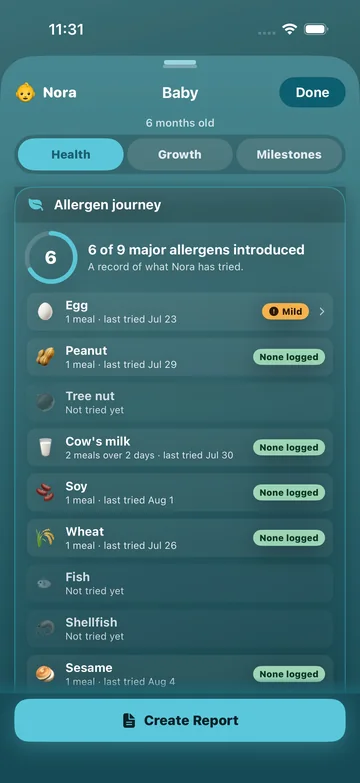
Follow the major allergen journey
The allergen journey gives you an at-a-glance record of introductions across nine major allergen groups. The allergen ring shows how many of nine you have tried. Each allergen opens with its meals, last attempt and reaction flags, so a food tried last week does not disappear into a daily feed list.
- Keep egg, peanut, tree nut, cow's milk, soy, wheat, fish, shellfish and sesame records together.
- See which foods have been tried and which have not.
- Add a reaction marker and your own observation notes.
- Bring the food and reaction timeline to a qualified health professional.
Feed Flow does not tell you when to introduce an allergen or whether a food is safe for your child. Follow local guidance and individualized advice, especially if your baby has eczema, an existing allergy or a previous reaction.
Example: egg yesterday, a reaction note today
The food and time remain in the allergen journey.
You record what you observed and when it appeared. The later note stays connected to the food history.
A time relationship alone does not prove that a food caused a symptom. Other foods, illness, skin irritation and many everyday factors can overlap. A clear diary helps a professional assess the situation; it does not replace that assessment.
How to keep an allergen reaction diaryKnow when the diary is not the next step
For severe, rapidly worsening or breathing-related symptoms, seek emergency medical care rather than stopping to log. For ongoing or concerning symptoms, contact your pediatrician or local health service.
For evidence-based clinical resources on food allergy, see the US National Institute of Allergy and Infectious Diseases guidelines. Guidance for families varies by country and individual circumstance.