The three time windows to keep distinct
According to the US Centers for Disease Control and Prevention, prepared infant formula should be used within 2 hours of preparation and within 1 hour from when feeding begins.
- After preparation: if you will not start using the formula within 2 hours, refrigerate it immediately.
- After feeding starts: use the bottle within 1 hour, then discard what remains.
- In the refrigerator: use refrigerated prepared formula within 24 hours.
These are US CDC storage guidelines, not a universal rule for every product or country. Always check the formula label and your local health authority. Some children need additional precautions.
Do not refrigerate a bottle your baby has already drunk from to save for later. CDC guidance says to discard leftover formula because saliva can allow germs to grow.
Preparation details matter as much as time
Use safe water, clean feeding equipment and the exact water-to-formula ratio on the container. Do not dilute formula or add extra powder to change the concentration. Check the container's use-by date and its instructions for storage after opening.
Powdered infant formula is not sterile. Babies who are very young, were born prematurely or have weakened immune systems may need extra precautions; discuss ready-to-feed options and preparation with a qualified professional.
Where Feed Flow helps, and where it cannot
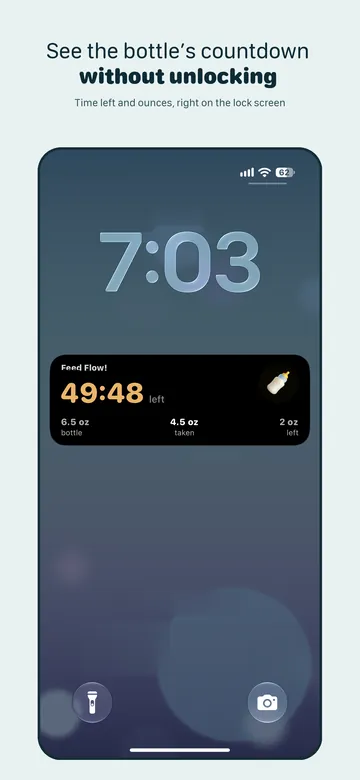
The countdown runs from when you make the bottle. The default is one hour for formula and two hours for pumped milk, and you can change it in Settings. It stays on the lock screen. That removes the need to remember the start time during a tired night feed.
- The app records the time you enter; it does not sense the room or refrigerator temperature.
- A timer cannot tell whether a bottle was prepared correctly or previously touched.
- The default one-hour countdown is not a replacement for the separate preparation and refrigeration windows.
- If timing is uncertain, follow local safety guidance rather than relying on a recollection or an app screen.
Think of Feed Flow as the notebook and clock, not the safety authority.
Reduce waste without stretching safety windows
Preparing closer to your baby's usual amount can reduce leftovers without trying to extend a bottle's life. After a few bottles, Feed Flow offers the amounts you usually pour as one-tap buttons, and you can turn this off in Settings.
Never pressure a baby to finish to avoid waste, and never reuse a leftover bottle outside official guidance. A little leftover milk can be the safer outcome.